


At a Glance
Protecting technology in exposed environments requires more than simply placing equipment inside a standard enclosure. You need to consider impacts, tampering, weather, maintenance and equipment performance. This guide compares three protective approaches from Oystashell®, Ventev and Chatsworth, helping you understand their intended applications and identify the factors that should influence your choice before installation.
Choose The Right Protection for Exposed Technology
CCTV cameras and exposed network equipment face different challenges depending on where they are installed. Surveillance cameras may need protection against tampering, impact and ligature risks, while wireless access points and antennas often require enclosures that protect against weather and environmental exposure.
Choosing the right solution means considering the equipment, its installation environment and the type of protection required. This guide compares three approaches, from purpose-designed CCTV covers to enclosures for wireless networking infrastructure, to help you understand which features are relevant to your site.
1. Oystashell
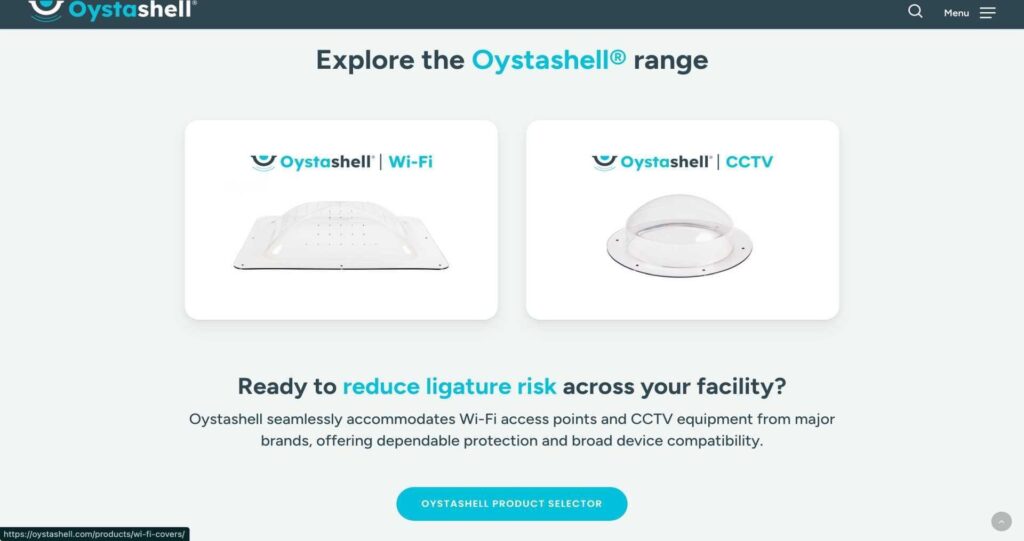
When protecting CCTV in demanding environments is your priority, Oystashell provides a purpose-built approach. They develop protective covers for Wi-Fi and CCTV equipment, with their CCTV range designed to help safeguard cameras from impact, tampering, vandalism and environmental exposure.
You can choose from several CCTV covers depending on your camera and installation requirements. The Oystashell 4 is designed for standard dome cameras up to 140mm in diameter, while the 4C accommodates corner-mounted installation and the 4L provides additional space for larger-format dome cameras. They also offer the 4-360, which is designed around the Verkada CF83-E fisheye camera.
Protection Keeping CCTV in Mind
The covers use 3mm riot-shield-grade polycarbonate, giving surveillance equipment a strong protective barrier without compromising camera visibility. The smooth profile supports anti-ligature considerations, which is relevant when cameras are installed within healthcare, custodial or other high-risk environments.
You can protect exposed cameras without surrounding them with a bulky metal cage. The low-profile design fits more neatly into the surrounding space, while anti-tamper screw kits provide additional protection against unauthorised access.
Suitable for Demanding Locations
You can use Oystashell CCTV covers in settings including hospitals, mental health facilities, schools, transport environments, custodial sites and public buildings. They are designed for cameras positioned in corridors, communal areas, entrances and exits where equipment remains vulnerable to accidental or deliberate damage.
The 4C is designed for dome cameras mounted at corner junctions, such as corridors, stairwells and entrance lobbies. If you need a protective solution for CCTV, Oystashell offers several formats to consider for your camera requirements. To discuss your cameras and location, contact them by phone, email or through the enquiry form.
2. Ventev
Ventev approaches equipment protection from a broader wireless infrastructure perspective, with products designed primarily for access points, antennas and networking equipment. Their range includes polycarbonate enclosures for demanding indoor and outdoor applications where equipment is exposed to weather, tampering or physical interference.
Protection for Outdoor Infrastructure
Their 12 x 10 x 4-inch NEMA 4X polycarbonate enclosure is designed for outdoor environments including stadiums and arenas. The enclosure uses a solid screw cover with tamper-resistant Torx-style screws.
Consider Your Equipment First
Ventev is relevant when your site contains several forms of exposed networking infrastructure that need protection. Their products combine environmental protection, tamper resistance and wireless performance, which is useful when connectivity equipment must remain operational in demanding locations.
This differs from purpose-designed CCTV protection. Oystashell uses riot-shield-grade polycarbonate in its camera covers, with designs that address anti-ligature and anti-tamper considerations. Ventev’s featured enclosure, by contrast, is for networking equipment, so the two approaches serve different installation requirements and are not direct substitutes.
However, if your requirement is specifically CCTV protection, check compatibility carefully before selecting an enclosure. Ventev’s enclosure portfolio is built for networking equipment rather than surveillance cameras.
3. Chatsworth Products
Chatsworth Products offers another approach through their Oberon wireless enclosures and mounts. Rather than focusing on CCTV cameras, their solutions protect wireless access points, antennas and associated networking equipment across indoor, outdoor and industrial environments.
Outdoor and Industrial Protection
The Oberon Skybar Environmental Enclosure 3000 provides an outdoor concealment solution for Wi-Fi access points, antennas, remote radio heads, cabling and connectors. Its rugged ABS construction is designed for outdoor use while remaining virtually transparent to wireless signals.
For locations where mounting equipment to a building or pole is impractical, consider Oberon NetPoint wireless bollards. These provide a secure way to house wireless equipment in open public spaces, while their construction offers environmental protection in conditions including falling rain, sleet and snow.
A Wider Infrastructure Approach
The materials and intended applications also distinguish these products from CCTV covers. Chatsworth’s featured wireless enclosures use ABS to house networking equipment, whereas Oystashell’s camera covers use riot-shield-grade polycarbonate and are made with anti-ligature and anti-tamper considerations in mind. The right choice depends on the equipment being housed and the specific risks at the installation site, not just the material.
To Sum Up
Before choosing protection for an exposed installation, start by identifying what needs protecting. CCTV cameras have different requirements from wireless access points, especially around visibility, viewing angles and mounting positions. Consider the equipment first, rather than choosing an enclosure because it appears physically robust.
Finally, think about how the enclosure affects performance. Your CCTV cover should preserve the camera’s intended visibility, while wireless enclosures should avoid interfering with signal performance. By comparing the application, construction and installation requirements, you can choose protection that supports your equipment without creating new practical problems.
